


Menu


Posted May 05, 2026 by Ingrid Lorenzi
Q&A with CRYSTAL KUNG, the author of Four in Love
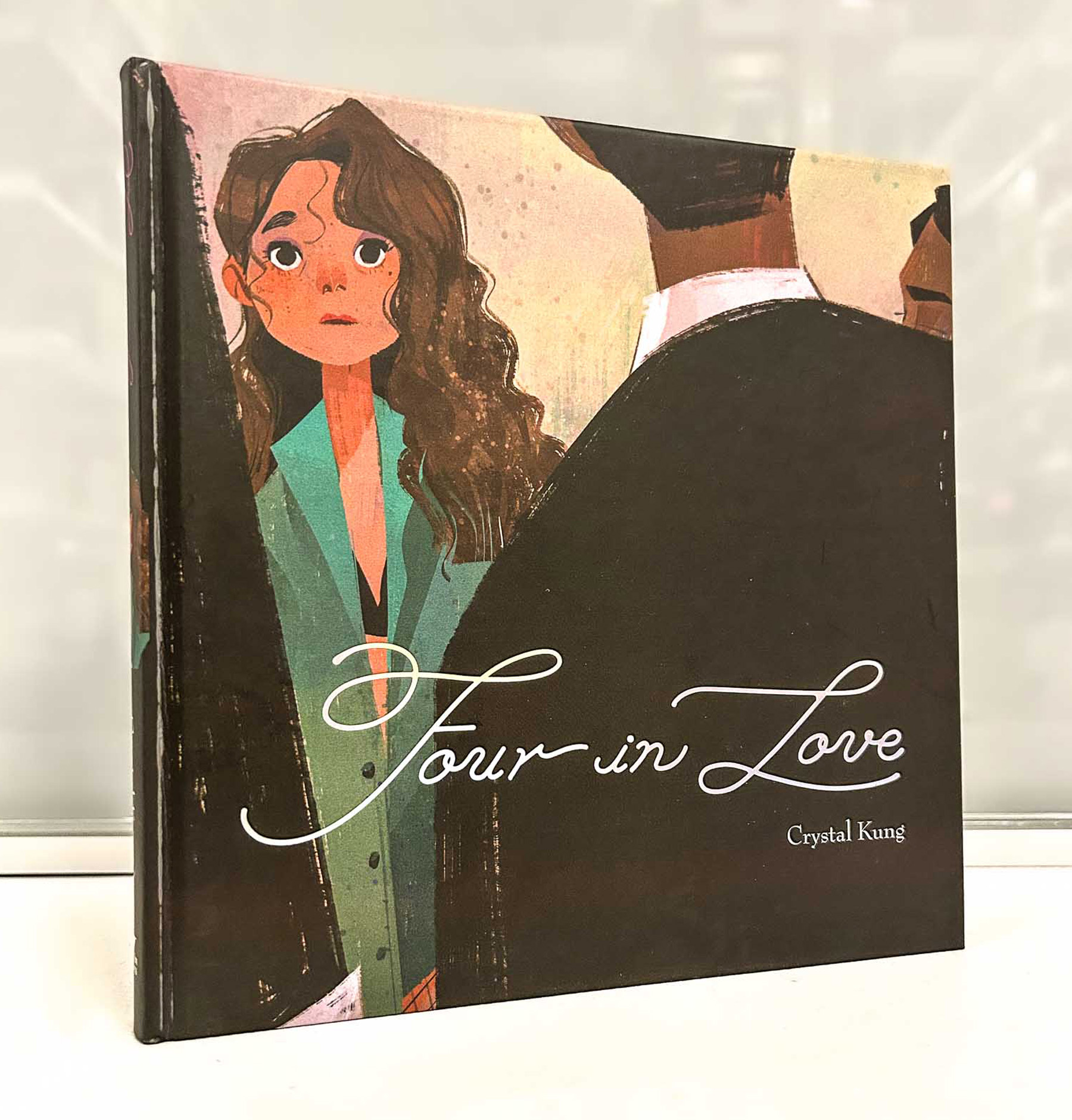
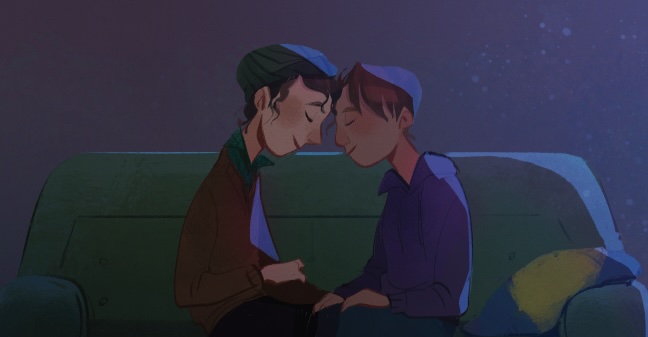
Ahead of the upcoming release of the wordless graphic novel, Four in Love, we had the opportunity to pick the brain of its creator, Crystal Kung!
Read on to learn more about Crystal, including her inspiration, animation experience, and more. And make sure to check out Four in Love here.
1. Can you tell us a bit about your background and what drew you to the field of animation?
Hi, I’m Crystal! I’m an artist from Taiwan, and I came to the US in 2016 to pursue a career in animation. It’s been almost 10 years already! Crazy! I’ve had the opportunity to work at Blue Sky Studios and Pixar Animation Studios as a character designer and visual development artist. Currently, I’m working in visual development at Studio MDHR on a 2D game project.
I’ve loved drawing since I was a kid. It's just something I’ve always done consistently. I’ve always been drawn to comics and cartoons, even as I grew up. But I didn’t realize it could be a career until college. I studied at a design university in Taipei, and around my second year, I discovered that my biggest passion was creating cartoons and comics.
Back then, Taiwan didn’t really have an animation industry focused on the kind of storytelling I was interested in, so I knew I needed to learn more to sharpen my skills. After graduating, I decided to move to the US and enrolled at CalArts. I studied there for 1.5 years. I needed to leave early because it was so expensive. But fortunately, I was able to start my career right after leaving school when I got hired by Blue Sky Studios. And that’s how my professional journey began!
2. Could you describe the process for your work in animation and how it compares/contrasts to your work for books?
Animation is very much a team effort. The movies and stories belong to the studios, and multiple artists collaborate on character designs and visual development. It requires a lot of communication and constant back and forth.
Books are almost the complete opposite. They feel much more personal because I’m usually the only artist working on the project from start to finish. It’s like I’m creating my own little baby, and I definitely feel a stronger emotional attachment to my book projects.
3. What’s been a stand-out moment for you during your professional career so far?
I usually work alone in my small room, behind screens. My art is made for an audience, but most of the time I don’t really know who that audience is. That changed once when I attended a movie night at a local theater for Nimona (my first movie credit). I sat in the back row and heard people laughing, kids asking questions, and discussions about the plot after the movie ended. The feeling was incredible. It’s still one of the most memorable moments in my career.
4. What tools (physical or software) do you like to use for your work?
I use Photoshop and Procreate for most of my digital work. When I’m not working professionally, I like experimenting with different traditional media. My favorites are charcoal and soft pastels!
5. When starting a new project, what kind of research or brainstorming do you do?
I enjoy doing thumbnails or just random scribbles, they help get my brain activated. Taking walks with my dog and doing a bit of people watching also inspires me.
6. Was there ever anything unexpected that you learned during your career that wound up being more helpful than you would have anticipated that you think inspiring artists should know about?
I was SO STRESSED when I first started, which makes total sense. I was super young, alone in a foreign country, trying to survive in a very competitive industry. But looking back now, I really wish I had allowed myself to enjoy life a bit more. I wish I had understood that life isn’t all about work and art. I wish I had been more open to stepping out of my bubble, making friends, and meeting all kinds of people. That would have broadened my experiences, enriched my storytelling, and helped me grow into a more mature artist. I wish I had realized earlier that you need to be good at living your life before you can truly excel at creating art.
7. There are often running jokes from artists online about the difficulty of drawing things like hands or backdrops. Do you have something that you dread drawing?
I absolutely hate drawing architecture or anything with perspective, it’s just painful for me. I’ve worked on so many movie projects as a set designer, but I still break a sweat whenever I have to draw a complicated car or building. I just love drawing wonky, quirky little things.
8. What inspired the concept/stories included in Four in Love?
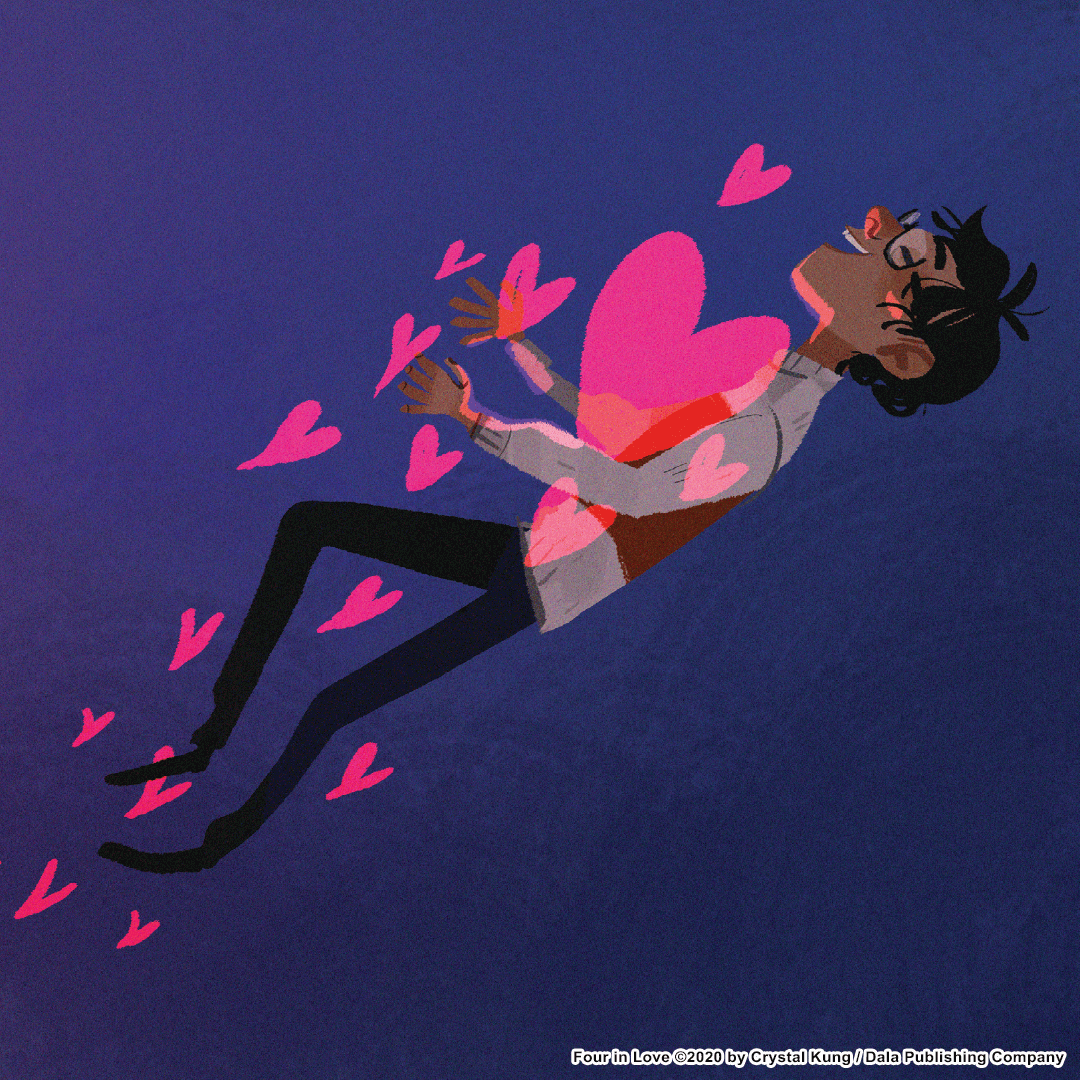
When I got the opportunity to publish this book, I was going through a really tough breakup. My mind was consumed by sadness and loneliness. I decided to make the book into a little murmur to myself, it was like a personal healing process at first.
9. You mentioned wanting to write about love but also how your stories became reflective of personal experiences you went through. When you first set out to work on this concept, did you have a different idea of what you wanted to portray and convey in your art?
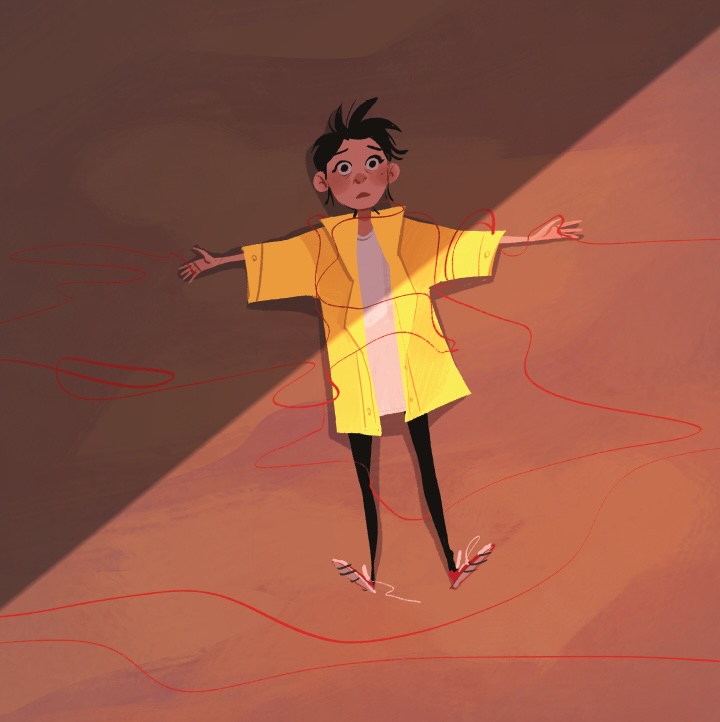
I actually created the story for the first chapter, “Red String”, long before the other stories. The red string is a traditional belief in Taiwan, an old man under the moon ties an invisible red string around the fingers of two people destined to be together. There are even temples in Taiwan where you can ask the Old Man for an actual red cord. Red String was the beginning of the whole book, a story about a person looking forward to love. I felt that way myself at one point in my life, and I even visited that temple back in Taiwan. But as life went on, heartbreak happened, over and over and over again.
I realized that love is more complicated than something you can simply look forward to. Heartbreak is a huge part of it. So the book evolved into a kind of little diary about love and relationships. But I quickly realized I didn’t have much personal experience in romance yet. Since I was still in a healing process, I spent a lot of time talking with friends about our dating horror stories and learning from their experiences. I discovered so many different ways people attach to one another, and those insights helped me create a variety of stories on the topic.
a. Somewhat of a follow-up question: is there an aspect you wanted to include but didn’t?
At first I planned to create seven chapters for the book, but I ended up with only four due to time constraints. There are still some more personal stories I’ve been developing, even up to today. It was hard not to get too attached to each story, which made the process take longer than I expected. Hopefully one day I’ll be able to publish them too!
10. While all of these stories are in many ways a part of you and your personal experience, is there one that really stood out for you (whether it was particularly cathartic to work on or perhaps the exact opposite and especially challenging)?
The first chapter, Red String, definitely means the most to me. I still remember the feeling of going to the temple and asking for a red string. It felt like looking forward to the future. But as time went on, you faced more and more disappointments, and yet somehow, you’re still holding onto that hope. I was trying to remind myself to stop chasing that distant future and instead focus on what I have in the present. It’s something I still try to remind myself of every day. And that feeling is what sparked the idea for the whole book!
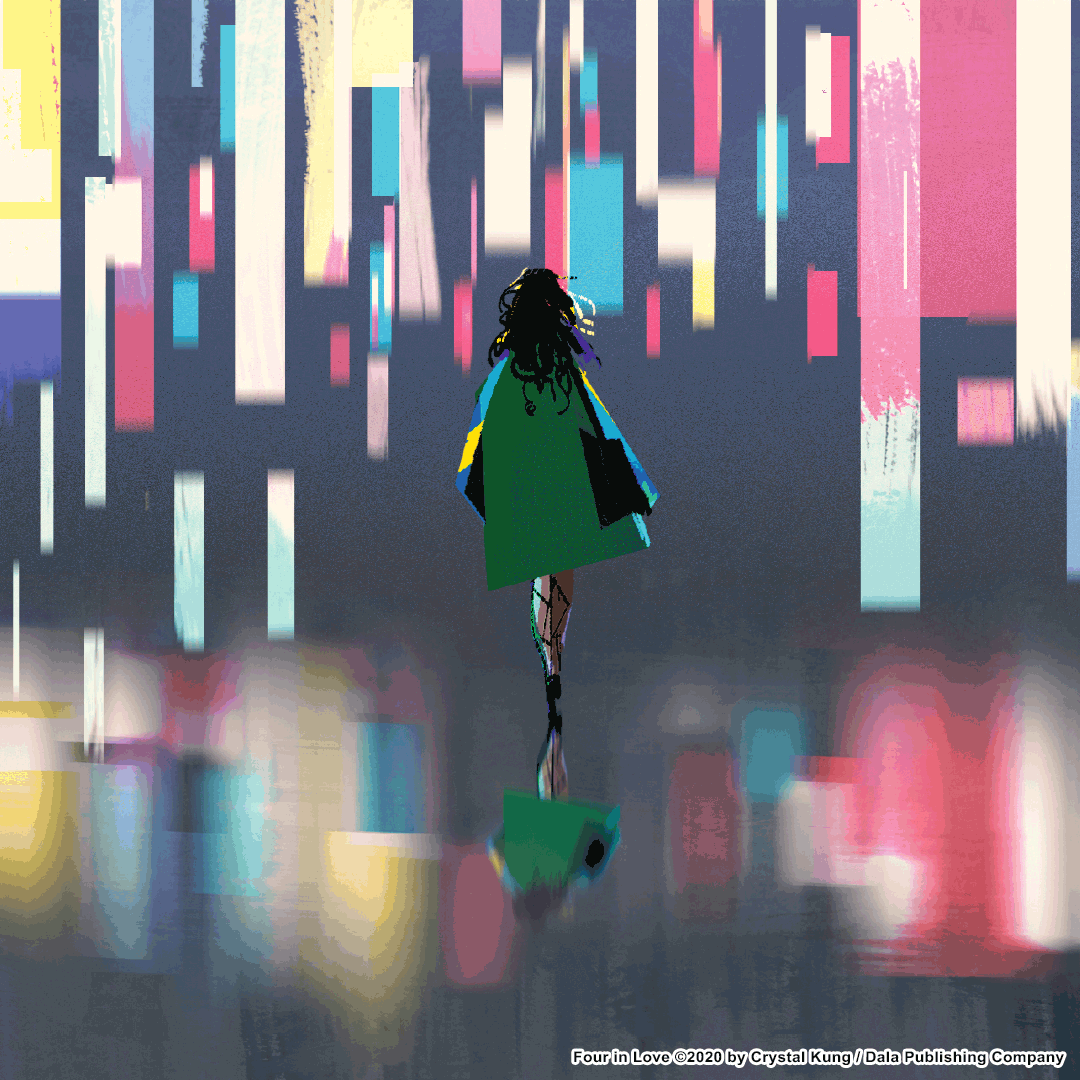
11. Some of the panels in each story feel like a film camera in the way they depict a character’s actions or perspective, etc. Was that intentional and, if so, how do you figure out which “shot” you want to have as the focus?
I wasn’t thinking internationally when I worked on the panels. As I mentioned, the whole book started as a little murmur to myself, it was like writing a diary. I just went with the flow, putting down whatever came to mind in the moment, and then cleaned it up later. Having worked in animation for so long, I sometimes approached comic panels the way I would storyboards for films. It’s really interesting to see how my brain worked after completing an entire book.
12. What do you hope readers will take away from Four in Love?
This book was healing for me as I created it. I tried to remind myself that there’s always a little spark in the dark, and that there’s always something to look forward to after heartbreak. I hope readers can feel that same sense of possibility and warmth through the book too!
SHARE:



Get the latest news
You will never miss updates if you subscribe to our newsletter.